Being our brother’s keeper doesn’t mean controlling his choices. It means loving him enough to care where those choices are leading.
This week on All Set for Sunday, Scott and Jeff welcome back Fr. Christian Raab to unpack readings that challenge us to think seriously about our responsibility for one another. The thread running through the readings is clear: Christian love isn’t passive. Sometimes, love asks us to speak up.
In the first reading, God appoints Ezekiel as a watchman for Israel. Ezekiel can’t control whether others listen, but he does have a responsibility to warn them when they’re headed down the wrong path. That theme continues in the Gospel, where Jesus gives practical instructions for responding when a brother sins: begin privately, speak truthfully, and keep seeking his good (Matthew 18:15 to 20).
Fr. Raab offers a helpful way to approach the difficult subject of fraternal correction:
Lead by example. Before correcting someone else, live the Gospel faithfully yourself.
Pray before you speak. Correction should come from a genuine desire for the other person’s happiness and holiness, not from wanting to win, shame, or prove a point.
Respect their freedom. We can speak the truth, but we cannot make another person choose it.
Protect their good name. Jesus begins with a private conversation, not public embarrassment.
Keep caring. The Gospel’s repeated attempts at reconciliation remind us that correction isn’t about checking a box. It’s about loving a person enough not to give up on them.
As Fr. Raab puts it, Cain’s famous question, “Am I my brother’s keeper?” ultimately has a Christian answer: yes. We are members of the Body of Christ, and our lives are connected.
That doesn’t mean correcting every stranger on the internet. Fr. Raab points us back to the biblical idea of the neighbor: the people actually near us, including our spouses, children, friends, coworkers, parishioners, and yes, even our literal neighbors.
🎧 Listen to or watch the full episode:
🎧 Spotify
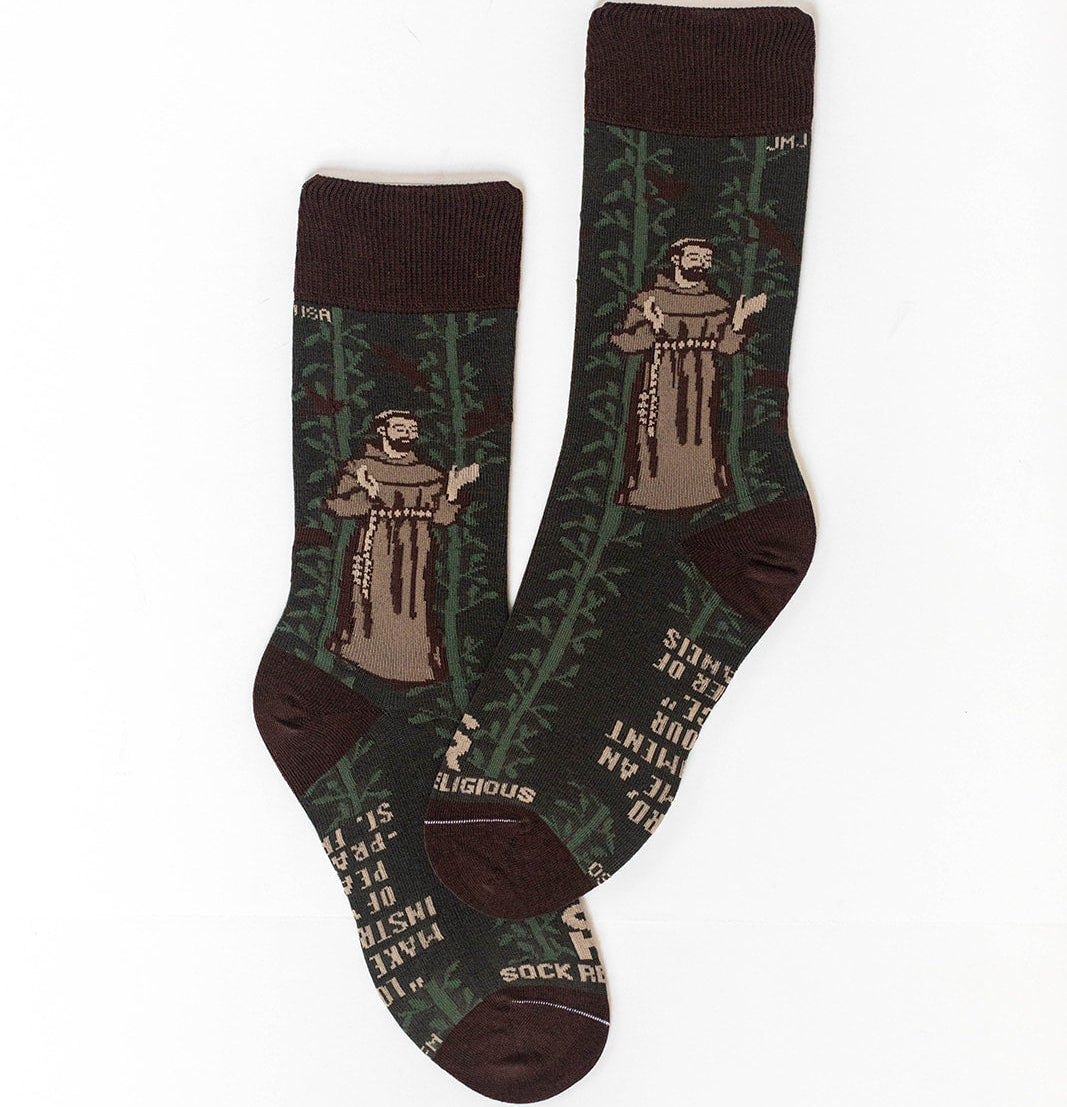
🧦 Product Spotlight: St. Francis of Assisi Socks
Fraternal correction starts with humility, love, and leading by example, making St. Francis a fitting companion as we ask how our own lives can quietly preach the Gospel before our words ever do.